Google Business Profile Optimization: The Definitive Guide
Optimize your Google Business Profile to rank in the local 3-pack. Complete guide covering photos, reviews, posts, Q&A, and category selection.

AEO Strategy Lead & Co-Founder
Your Google Business Profile Is Your Most Important Local Asset
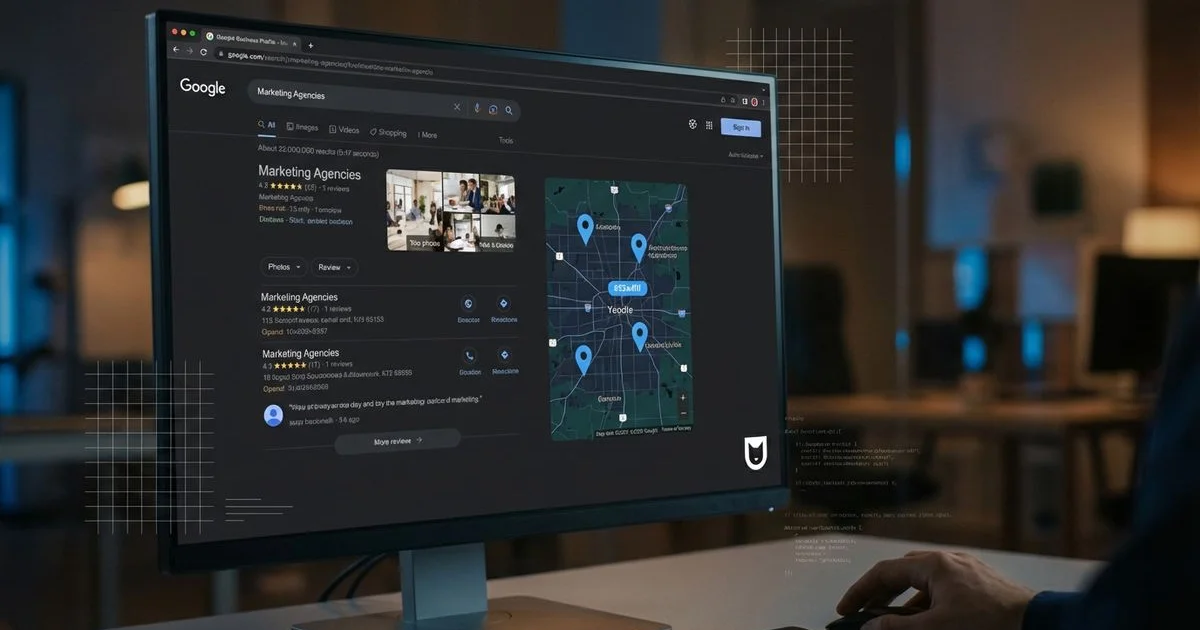
For many Hawaii businesses, a Google Business Profile (GBP) drives more revenue than a website. When a potential customer searches for “lunch near me” or “contractors in Honolulu,” the Google local 3-pack dominates the screen. This section displays three businesses with ratings, hours, and direct contact options.
We know from experience that securing a spot here captures attention instantly. Appearing in this prime real estate means you reach customers before they even scroll down to organic website listings.
This guide covers the specific steps for Google Business Profile optimization, moving from basic setup to the advanced tactics we use at Nekko Digital to help clients outperform competitors. GBP optimization is a critical component of any comprehensive local SEO strategy.
Complete Profile Setup: The Foundation
Claiming and Verifying Your Profile
If you have not already claimed your Google Business Profile, this is your immediate priority. Search for your business on Google, select “Claim this business,” and begin the verification process. While Google used to rely heavily on postcards, we now see video verification becoming the standard for new accounts in 2025/2026.
You will likely need to record a continuous video showing your street sign, unlocking your door, and your workspace. Verification is mandatory. Unverified profiles remain invisible in the local 3-pack and cannot access essential features like review responses or insights.
Business Name
Use your actual, legal business name exactly as it appears on your signage. We often see business owners try to “optimize” this by adding keywords, but that is a dangerous game. Adding descriptors like “Best Plumber Honolulu” to a name like “Aloha Plumbing” violates Google’s guidelines.
Suspensions are difficult to reverse. If your legal name naturally contains keywords, that is acceptable. Otherwise, stick to your registered name to ensure longevity.
Business Description
You have 750 characters to write a clear summary of your business. We recommend using about 700 of them to outline your primary services, unique selling points, and the specific neighborhoods you serve.
This text does not directly impact your ranking in the 3-pack. However, it heavily influences conversion rates. A compelling description convinces the user to call you instead of the listing next to you.
Category Selection: One of the Most Important Ranking Factors
Your primary category acts as your strongest signal to Google about what you do. Selecting the correct one is often the deciding factor between ranking first or not ranking at all.
Primary Category
Select the most specific category available. We always advise clients to drill down as deep as possible. If you run a poke shop, “Poke Bar” is significantly better than “Restaurant” because it aligns with specific user intent.
Additional Categories
You should also add every relevant secondary category. A landscaping company in Kapolei might use “Landscaper” as the primary, but they must also include “Lawn care service,” “Tree service,” and “Landscape designer” if they offer those services. This expands your visibility for niche searches.
Category Research
We find that looking at competitors provides the best data. Search for your main service, see who ranks in the top three, and check their categories. Tools like GMBspy or Pleper allow you to view the categories your competitors are using to dominate the market.
| Feature | Best Practice | Why It Matters |
|---|---|---|
| Primary Category | Be specific (e.g., “Pizza Restaurant” vs. “Restaurant”) | heavily influences the main keywords you rank for. |
| Secondary Categories | Add 3-5 relevant services | Expands reach to specific niche queries. |
| Consistency | Match categories to your website content | Reinforces relevance to Google’s algorithm. |
Photo Optimization: Show, Do Not Just Tell
Google data indicates that businesses with photos receive 42% more requests for directions and 35% more website clicks. We treat photo optimization as a requirement, not a suggestion.
Required Photo Types
- Logo: A high-resolution, square format image (min 720x720 pixels).
- Cover photo: This is often your first impression in the search results.
- Exterior photos: Help customers find your location, which is crucial for spots in complex shopping centers.
- Interior photos: Show the ambiance and cleanliness of your space.
- Team photos: Humanize your brand with shots of your actual staff.
- Work/product photos: Upload proof of your capabilities.
Photo Best Practices
Upload new images consistently. We recommend adding at least one new photo weekly to signal to Google that the business is active. Always use high-resolution JPG or PNG files that are well-lit and in focus.
Avoid stock photos at all costs. Users can spot generic imagery immediately, and it erodes trust. Authentic photos of your team working or your actual products perform significantly better.
Review Management: The Make-or-Break Factor
Reviews drive local search behavior more than any other metric. They dictate your ranking prominence and convince customers to trust you.
Building a Review Generation System
You need a repeatable process for gathering feedback. We have found the highest success rates come from asking immediately after a positive interaction.
- Send a text or email with a direct review link instantly.
- Train staff to verbally mention reviews at the end of a transaction.
- Use a QR code at your checkout counter for easy access.
- Never offer discounts or money for reviews, as this leads to swift penalties.
Responding to Every Review
Reply to every single review within 48 hours. When you receive a positive review, thank the customer and mention a specific detail about their visit to show you are listening.
Negative reviews require a strategic approach. Acknowledge the issue, apologize without being defensive, and offer to discuss it offline. We view these responses as a marketing tool. Future customers read them to see how you handle conflict.
For a detailed review strategy, read our guide on building an online review strategy.
Google Posts: Your Free Marketing Channel
Google Posts appear directly in your profile and offer a unique way to grab attention. They allow you to broadcast updates to people actively searching for you.
Types of Google Posts
- Update posts: Share general news or recent changes.
- Offer posts: Highlight discounts with specific start and end dates.
- Event posts: Promote upcoming workshops or community events.
Google Posts Best Practices
Aim to publish a new post every 7 days. We see a correlation between active posting and sustained rankings. Every post should include a clear action button like “Order Online” or “Call Now.”
Visuals are critical here as well. Posts with custom photography receive higher engagement than text-only updates. Focus your content on helpful information or timely offers rather than generic company news.
Q&A Section: Control the Narrative
The Q&A section is often overlooked, but it poses a risk if ignored. Anyone can answer questions on your profile, meaning strangers could be giving your customers wrong information.
Proactive Q&A Management
We recommend populating this section yourself. Write out the top five questions your front desk receives and post them from your personal account, then answer them officially from the business profile. This creates a verified FAQ list for potential customers.
Check this section weekly. Google does not always send notifications for new questions, so manual monitoring is the only way to ensure accuracy.
Tracking Your GBP Performance
Google offers a “Performance” tab (formerly Insights) that provides data on how users interact with your listing.
Key Metrics to Monitor
- Search queries: Identifying the exact words people use to find you helps refine your content.
- Profile views: This tracks your overall visibility in search and maps.
- Direction requests: A high number here indicates strong local intent.
- Phone calls: These are high-value leads coming directly from the listing.
- Website clicks: Measures how well your profile drives traffic to your site.
- Photo views: Compare your visual engagement against competitors.
Review these numbers every month. If you see direction requests dropping, your local ranking might be slipping in specific neighborhoods. If clicks are up but calls are down, your landing pages might need work.
For more on improving those landing pages, check our thoughts on conversion rate optimization.
Advanced GBP Optimization
Once you master the basics, you can apply more technical strategies to gain an advantage.
- Product Editor: Add your inventory or service packages with photos and prices directly to the “Products” tab.
- Messaging: Enable chat to let customers text you directly from Google Maps.
- Special Hours: Update these proactively for every holiday to avoid frustrating customers.
- Attributes: Select every applicable tag, such as “Veteran-owned” or “Wheelchair accessible.”
- UTM Tracking: Add tracking codes to your website link to see exactly how much traffic GBP generates in Google Analytics.
We treat a Google Business Profile as a living entity. The companies that win in the local 3-pack are those that update their profile as often as their social media. Combine these tactics with broader local SEO strategies to secure your market position.
Rodrigo Diniz
AEO Strategy Lead & GEO Specialist
AEO Strategy Lead at Nekko Digital with 15+ years in digital marketing and AI search optimization.