How ChatGPT Is Changing Search and What It Means for Your Business
ChatGPT and AI search are reshaping how customers find businesses. Learn what this means and how to adapt your digital strategy.

AEO Strategy Lead & Co-Founder
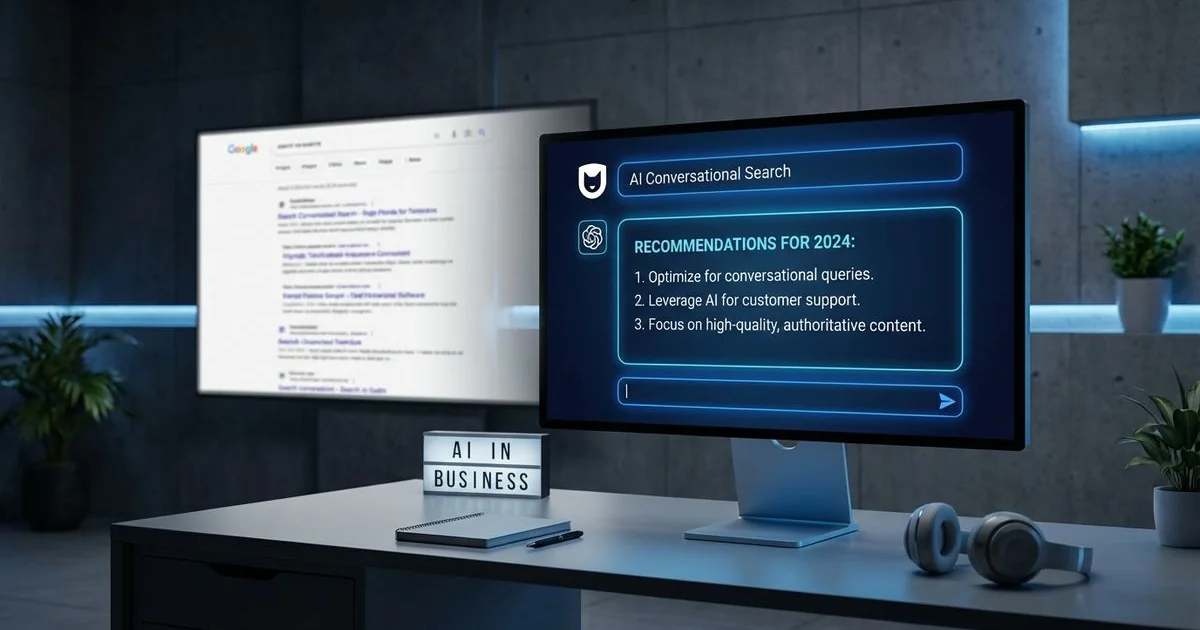
The Shift to Conversational AI in Hawaii
The way people find local businesses is undergoing its biggest change in twenty years.
We have watched the internet evolve from a directory of blue links into an intelligent conversation partner.
For a long time, a user would type “best plumber Honolulu reviews” into a search bar and hope for the best.
Now, that same user asks a complete question.
“Can you recommend a reliable plumber in Kaimuki who specializes in historic homes and has 5-star reviews?”
This shift is not hypothetical.
ChatGPT has surpassed 200 million weekly active users, and its search features are actively reshaping how potential customers discover services. This is precisely why generative engine optimization has become essential for forward-thinking businesses.
For business owners here in the islands, the implications are immediate.
How ChatGPT Search Actually Works
Understanding the mechanics behind this technology helps you adapt your strategy effectively.
When a potential client asks ChatGPT a question requiring current information, the system follows a specific multi-step process.
Real-Time Web Retrieval
ChatGPT uses a browsing capability that searches the web in real time.
It queries multiple sources, reads the content of relevant pages, and synthesizes the information into a single response.
This differs fundamentally from traditional search engines.
Google presents a list of links and leaves the sorting to the user.
ChatGPT does the reading for them.
Source Evaluation and Trust
The AI evaluates each source for relevance, authority, and trustworthiness before generating an answer.
Content from established domains with clear expertise signals is weighted much more heavily than thin or unverified content.
This is why E-E-A-T optimization is so critical for AI visibility.
We see this consistently in our data analysis.
Sites that demonstrate Experience, Expertise, Authoritativeness, and Trustworthiness get cited.
Those that don’t get ignored.
Answer Synthesis
Rather than showing ten blue links, ChatGPT combines information from multiple sources into a single narrative answer.
It may cite two, three, or five sources within that answer.
This gives those cited brands direct visibility.
Citation and Attribution
When ChatGPT cites your brand or links to your content, the user sees your business name within a trusted response.
This form of visibility carries significant credibility.
The AI has effectively endorsed your content as reliable.
Comparison: Traditional Search vs. AI Search
| Feature | Traditional Search (Google) | AI Search (ChatGPT/Perplexity) |
|---|---|---|
| Output | List of 10+ links | Single synthesized answer |
| User Action | User clicks and reads sites | AI reads and summarizes for user |
| Traffic Type | High volume, mixed intent | Lower volume, high intent |
| Ranking Factor | Keywords & Backlinks | Authority & Citations |
| Local Focus | Map Pack & Directories | Contextual Recommendations |
The Impact on Business Traffic and Discovery
Declining Click-Through Rates for Standard Results
As more users get their answers directly from AI, fewer people click through to individual websites from traditional search results.
This does not mean website traffic is disappearing entirely.
It means the nature of search traffic is evolving.
We advise clients to expect a shift in metrics.
Businesses relying solely on organic clicks for general queries may see gradual declines.
New Discovery Channels
AI search creates entirely new ways for customers to discover your business.
Someone asking ChatGPT “What is the best place for a business lunch in downtown Honolulu?” might see your restaurant recommended alongside competitors.
This discovery opportunity did not exist two years ago.
Higher Intent Leads
Users who discover your brand through AI search tend to be further along in their decision-making process.
The conversational nature of AI search means they have already asked detailed, specific questions.
When they visit your website or contact your business, they arrive with more context.
They are ready to buy or book. A strong answer engine optimization strategy ensures your brand is the one they find at this critical moment.
Which Industries Are Most Affected
While every industry feels the impact, some sectors in Hawaii are experiencing more dramatic shifts than others.
Professional Services
Lawyers, accountants, and consultants are heavily affected.
Potential clients frequently ask complex, advice-seeking questions that AI excels at answering.
When someone asks “How do I choose the right digital agency in Hawaii?” the businesses cited in that response gain a significant advantage.
Our guide on how to choose an SEO agency is an example of content designed for this exact scenario.
Healthcare and Wellness
Patients increasingly ask AI about symptoms, treatments, and provider recommendations.
Healthcare providers who establish strong authority signals are more likely to be recommended.
Local Services and Trades
Home services, restaurants, and retail businesses are affected as AI search becomes location-aware.
Users asking “What is the best roofing company for windward Oahu?” expect AI to provide specific, localized recommendations.
Real Estate and Construction
Homebuyers are using AI to analyze neighborhoods and market trends.
They ask questions like “Which condos in Kaka’ako have the lowest maintenance fees?”
Construction firms and realtors that publish specific data on these topics get the citations.
3 Steps to Adapt Your Business Strategy
Step 1: Audit Your AI Visibility
You need to understand where you stand before you can improve.
Ask ChatGPT, Perplexity, and Google AI Overviews questions that your ideal customers would ask.
- “Who is the best custom home builder in Honolulu?”
- “Where can I find authentic poke near the airport?”
- “Top rated commercial real estate agents in Hawaii.”
Note whether your brand appears in the responses.
Check which competitors are cited and what types of content the AI references.
This audit reveals gaps in your current strategy.
Step 2: Build Citation-Worthy Content
AI search engines cite content that provides clear, authoritative, well-structured answers.
Your content strategy needs to shift from keyword-focused articles to expert-driven resources.
We recommend ensuring every piece of content includes these elements:
- Direct Answers: Answer specific questions in the first paragraph.
- Local Expertise: Mention specific locations (e.g., “Manua,” “Kapolei”) rather than just “Hawaii.”
- Data and Examples: Include pricing ranges, timelines, or case studies.
- Structure: Use clear headings that AI can easily parse.
For a detailed content strategy framework, read our guide on building content that ranks.
Step 3: Strengthen Your Digital Authority
AI engines do not just evaluate individual pages.
They assess your overall brand authority.
This means your digital strategy must be comprehensive.
- Consistent Presence: Maintain active profiles on authoritative platforms like LinkedIn and Crunchbase.
- Named Authors: Use bylines with verifiable credentials on all blog posts.
- External Citations: Get mentioned in local news (like Pacific Business News) or industry journals.
- Depth of Coverage: Create a website that covers your subject matter exhaustively.
Building this authority takes time.
However, it creates a compounding advantage as AI search continues to grow.
Preparing for the Future of Search
ChatGPT search represents a fundamental shift in how people access information.
It is not a passing trend.
Companies that adapt now will be the ones that AI engines learn to trust and recommend.
Those that ignore this shift risk becoming invisible to a growing segment of their market.
Start with the fundamentals.
Focus on strong technical SEO to ensure bots can crawl your site.
Create authoritative content that answers real user questions.
Develop a clear GEO strategy to target these new engines specifically.
The sooner you begin optimizing for AI search, the stronger your position will be as this channel expands.
Rodrigo Diniz
AEO Strategy Lead & GEO Specialist
AEO Strategy Lead at Nekko Digital with 15+ years in digital marketing and AI search optimization.