How to Build an Online Review Strategy That Attracts Customers
Online reviews directly impact local SEO rankings and customer trust. Learn how to build a review strategy that generates consistent 5-star feedback.

AEO Strategy Lead & Co-Founder
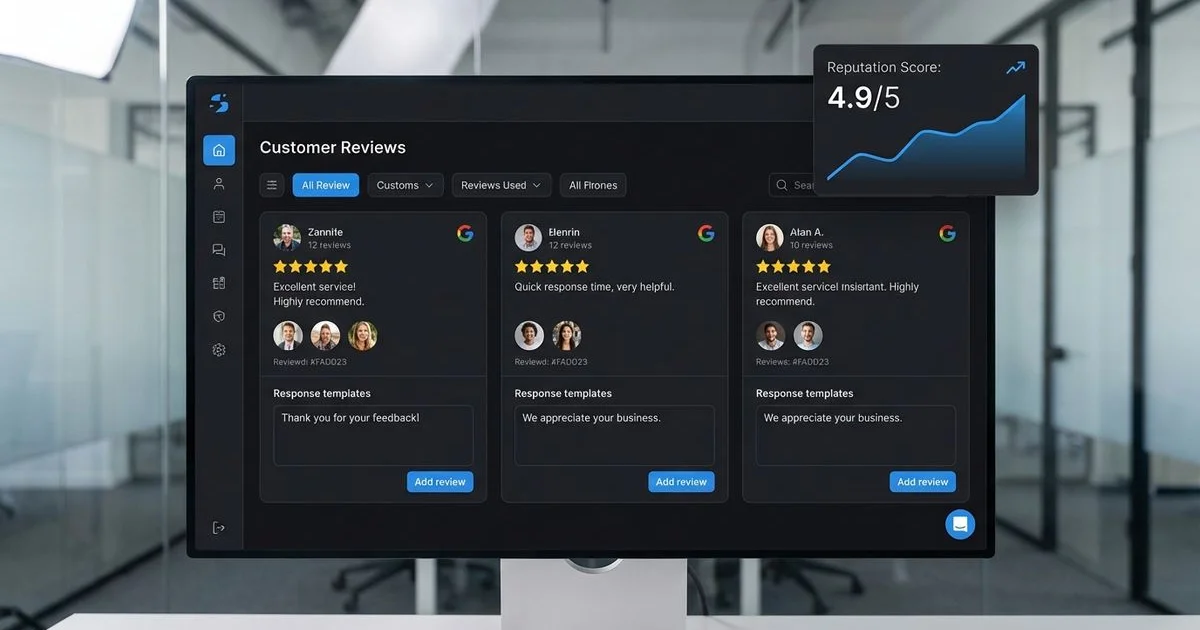
Reviews Are Your Most Powerful Marketing Asset
You know that feeling when you’re choosing a restaurant in Kaimuki or looking for a contractor in Kapolei. The first thing you do is check the star rating.
We have seen this behavior evolve from a casual habit into the single most critical step in the buying journey. Research from 2024 confirms that 98% of consumers read online reviews for local businesses before making a decision.
The stakes are higher than ever.
In late 2024, the Federal Trade Commission (FTC) finalized its “Rule on the Use of Consumer Reviews and Testimonials.” This regulation banned fake reviews and insider testimonials, making authentic, customer-generated feedback the only currency that matters.
For local businesses, reviews do two specific jobs.
First, they act as your 24/7 sales team. Second, they are a primary signal for search engines. A business with a steady stream of feedback ranks higher in Google’s local 3-pack, captures more traffic, and converts visitors at a much higher rate.
We treat this as a fundamental operational requirement. Building a system to manage this feedback is not just a marketing task. It is the backbone of your digital reputation, which is why professional reputation management is so valuable for local brands.
The Impact of Reviews on Local Search Rankings
Google’s local search algorithm is smart, but it relies heavily on specific signals to decide who gets the top spot.
We rely on the annual Whitespark Local Search Ranking Factors report to guide our strategies. The latest data indicates that review signals make up roughly 17% of how Google decides to rank local pack results.
Here is how the algorithm breaks down the value of your reviews:
| Signal | What It Measures | Why It Matters |
|---|---|---|
| Velocity | Speed of new reviews | A steady trickle beats a sudden flood (which looks suspicious). |
| Diversity | Variety of platforms | Google likes seeing feedback on Yelp, Facebook, and BBB too. |
| Keywords | Service-specific terms | ”Best poke bowl” or “fast AC repair” in text helps you rank for those terms. |
Review Quantity
Volume acts as a trust anchor. If you have 200 reviews and your competitor has 12, customers assume you are the established market leader. Google uses this count to verify that your business is active and relevant to the community.
Review Quality
The star rating is your digital curb appeal. Data from the Spiegel Research Center suggests that the purchase likelihood for a product with five reviews is 270% greater than the purchase likelihood of a product with no reviews.
We also know that perfection isn’t always the goal. A 5.0 rating can sometimes look “too good to be true,” while a 4.7 often feels more authentic to skeptical users.
Review Recency
A five-star review from 2022 holds almost no weight today. Recent feedback proves you are still open and still delivering quality service. If your last review is six months old, Google may assume your business has stagnated or closed.
Review Content
The actual words in the review are gold mines for SEO. When a customer writes, “Their emergency plumbing service in Kailua was outstanding,” they are feeding Google the exact keywords you want to rank for.
This semantic richness tells the search engine that you are relevant for specific queries, not just general terms. A comprehensive local SEO strategy leverages this review content to boost your visibility across the board.
For a complete local SEO strategy that incorporates reviews, read our Google Business Profile optimization guide.
Building a Review Generation System
Hope is not a strategy. You cannot wait for customers to feel inspired to write a review.
We build systems that remove the friction from the process. You need a repeatable workflow that captures feedback while the experience is fresh.
Identify the Right Moment
Timing is the difference between a “yes” and silence. The psychological concept of the “Recency Effect” means customers are most likely to act when the dopamine from a good experience is still active.
For a realtor, this is the moment keys are handed over. For a retail shop, it is the moment the customer smiles at their purchase.
Make It Effortless
If a customer has to click more than twice, you will lose them. We use tools like GatherUp or Podium to create frictionless paths to your Google Business Profile.
Every barrier lowers your conversion rate. Provide a direct link through the channel your customer already uses:
- SMS Deep Links: Text messages have a 98% open rate compared to 20% for email.
- NFC Cards: A physical card the customer taps with their phone to open the review window instantly.
- Dynamic QR Codes: Place these on receipts or invoices so customers can scan and review in seconds.
- Follow-up Emails: Include a prominent button that says “Share Your Experience.”
Train Your Team
Your staff is your frontline. They should know how to ask for feedback without making it awkward.
We train teams to use the “sentiment check” method. The employee asks, “How was everything today?” If the answer is glowing, they follow up with, “We’d love if you shared that on Google.” This pre-qualifies the customer and ensures you are asking the happiest people.
Automate Where Possible
Manual requests often get forgotten during a busy workday. CRM tools can trigger these requests automatically based on closed tickets or completed sales.
A trigger set for 2 hours after service completion hits the sweet spot. It ensures every single customer gets asked, eliminating human error from the equation.
When and How to Ask: Best Practices
There is an art to the ask. You want to be persistent without being annoying.
Timing
- Service Biz: Send the request the moment the technician leaves the driveway.
- E-commerce: Time the request to arrive 2 days after the estimated delivery date.
- Consulting: Ask after a specific win or milestone, not just at the end of a contract.
Tone
The request should feel like a conversation, not a transaction.
We focus on “helping others” rather than “helping us.” A phrase like “Your feedback helps your neighbors find the right service” is more motivating than “Please help us get 5 stars.”
What to Avoid
There are strict lines you must never cross.
- No Gating: You cannot ask customers if they liked the service and only send the review link to the happy ones. This is called “review gating” and Google will penalize you for it.
- No Incentives: Never offer cash, discounts, or freebies for reviews. The FTC can fine businesses up to $50,000 per violation for this practice.
- No Coercion: Never pressure a customer right in front of you. It makes them uncomfortable and leads to dishonest feedback.
Responding to Negative Reviews
You will eventually get a bad review. It happens to the best businesses.
We view negative reviews as an opportunity to demonstrate professionalism to future customers. People are reading your response to see if you are reasonable and safe to do business with.
The Response Framework
Acknowledge Start by validating their feelings. A simple “Thank you for bringing this to our attention” lowers the temperature immediately.
Apologize Say you are sorry they had a bad experience. This is not an admission of legal liability. It is a display of empathy.
Address Explain the standard you strive for. Do not get defensive or argue the facts. “We aim for 15-minute wait times and fell short” is better than “You came during rush hour.”
Offer Resolution
Take it offline immediately. Provide a direct email address like owner@yourbusiness.com. This shows you are serious about fixing it and stops the public back-and-forth.
What Not to Do
- HIPAA/Privacy Violations: If you are a medical or legal professional, never confirm the reviewer is a patient or client.
- ** emotional Reactivity:** Never reply when you are angry. Wait 24 hours.
- Copy-Paste: Never use a generic template. It proves you aren’t actually listening.
Leveraging Reviews Across Your Marketing
Your reviews should not live and die on Google Maps. They are versatile content assets.
We integrate this social proof into every stage of the marketing funnel.
Website Integration
Your homepage needs to scream credibility. We use widgets like Elfsight or ReviewsOnMyWebsite to pull fresh 5-star reviews directly onto the site.
Testimonials from real customers with their names and the service they received are powerful conversion tools. This connects directly to your website conversion rate optimization efforts.
Social Media
Turn your best reviews into Instagram Stories or LinkedIn posts. A graphic template with a quote and five gold stars stops the scroll.
Tag the customer if appropriate. It validates them and often leads to them resharing your post, expanding your reach to their network.
Sales Materials
Proposals often look the same. Including a “What Our Clients Say” slide with a 4.9-star badge differentiates you from the competition.
When a potential customer sees that you have a 4.8 rating from 200 reviews, it builds immediate credibility.
Case Studies
Sometimes a short review hints at a bigger story. Reach out to those detailed reviewers to see if they will participate in a full case study.
These deep dives provide both social proof and valuable content for your website.
Monitoring and Managing Your Review Ecosystem
Set Up Alerts
You cannot respond if you don’t know a review exists. Google Business Profile settings allow you to get an email instantly when a new review lands.
We also recommend checking third-party sites like Yelp, Facebook, and industry-specific platforms like Avvo or TripAdvisor.
Track Review Metrics
You should measure the health of your reputation monthly. Look at these specific KPIs:
- Review Velocity: Are you getting 2 reviews a month or 20?
- Average Rating Trend: Is your score creeping up or sliding down?
- Sentiment Analysis: Are people consistently using words like “expensive” or “slow”?
- Response Time: How quickly is your team getting back to customers?
Address Recurring Themes
Data is useless without action. If three people mention that your receptionist is rude, you don’t have a review problem. You have a staffing problem.
Positive themes tell you what to emphasize in your marketing. Negative themes identify operational issues that need to be addressed at the source.
A strong review strategy creates a virtuous cycle: good reviews attract more customers, who have good experiences, who leave good reviews. Combined with a strong local SEO foundation and an optimized Google Business Profile, your review strategy becomes one of the most powerful growth engines for your local business.
Rodrigo Diniz
AEO Strategy Lead & GEO Specialist
AEO Strategy Lead at Nekko Digital with 15+ years in digital marketing and AI search optimization.