What Is Answer Engine Optimization (AEO) and Why It Matters
AEO is the art of positioning your content as the definitive answer in search. Learn how featured snippets and voice search drive qualified traffic.

AEO Strategy Lead & Co-Founder
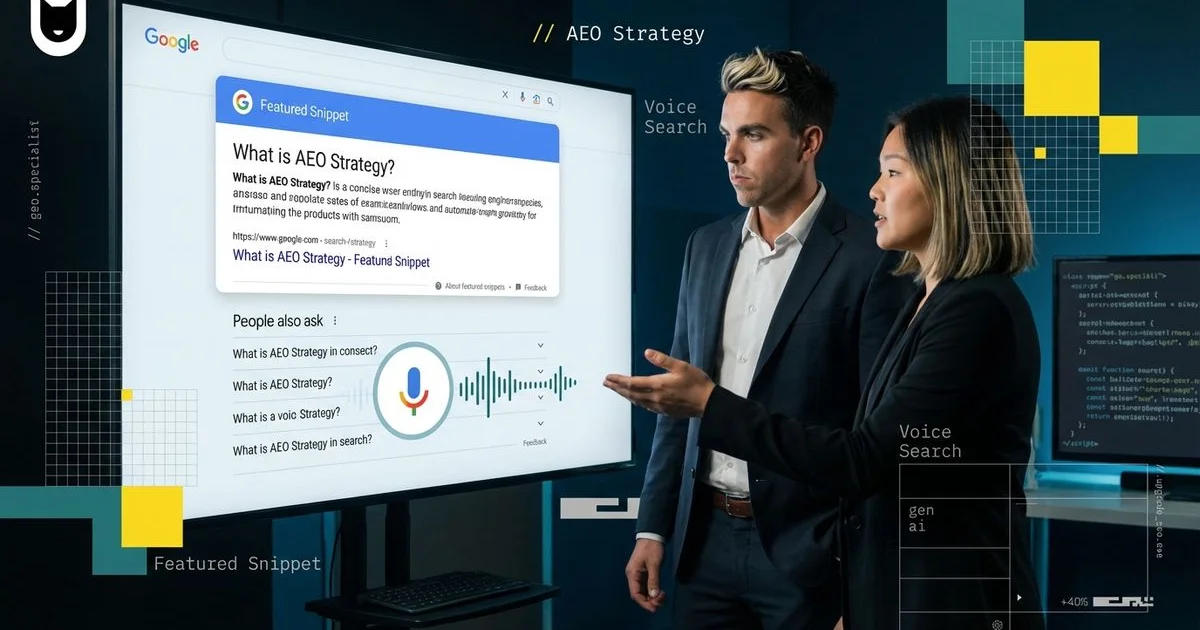
The Zero-Click Reality of Modern Search
More than 60% of all Google searches now end without a single click to a website, according to recent 2024 and 2025 data from SparkToro and Similarweb. This statistic represents a fundamental change in user behavior. We see this shift playing out every day with local Hawaii businesses, where tourists and locals alike want instant answers rather than a list of links.
You have likely experienced this yourself when asking Siri for the “best poke near me” or Googling “hardware store hours Honolulu.” The search engine provides the answer directly on the results page through featured snippets, AI Overviews, or voice responses. For business owners, this “zero-click” reality creates a new urgency. It has birthed a specific discipline we call Answer Engine Optimization, or AEO.
What Is Answer Engine Optimization?
Answer Engine Optimization is the strategic practice of formatting your content so AI models and search engines choose it as the primary direct answer. While traditional SEO focuses on ranking your website in a list of blue links, AEO aims to position your brand as the single source of truth that appears before those links.
We treat AEO as the next evolution of digital visibility. It targets several specific answer-driven formats:
- AI Overviews (formerly SGE): Generative summaries that appear at the very top of search results, now triggering for nearly 17% of queries according to 2025 Semrush data.
- Featured Snippets: The classic “position zero” box that highlights a concise answer.
- Voice Search Responses: The spoken answer delivered by Alexa, Siri, or Google Assistant, which is often read directly from a featured snippet.
- Local Knowledge Panels: The information box displaying your hours, address, and reviews.
Winning these spots is critical because users are increasingly making decisions based solely on this surface-level information. Our answer engine optimization service is built around capturing these high-value placements for local businesses.
Types of Answer Results and How to Win Them
Understanding the different types of answer results allows you to tailor your content effectively.
Featured Snippets
Featured snippets remain the most coveted real estate in search results. They typically appear in three main formats, each requiring a different optimization approach.
Paragraph Snippets are the most common, making up about 70% of all snippets. To capture these, you must provide a direct, definition-style answer of 40 to 60 words immediately following a heading. We recommend starting with the core answer and then expanding on the details in subsequent sentences.
List Snippets appear for queries implying a process or a collection, such as “steps to renovate a lanai” or “best beaches for kids on Oahu.” Use standard HTML ordered or unordered lists to make it easy for Google to extract this data.
Table Snippets are triggered by data comparisons, such as pricing lists or size charts.
| Result Type | Best For | optimization Strategy |
|---|---|---|
| Paragraph | Definitions, “What is” questions | 40-60 word concise summary |
| List | ”How to” steps, “Best of” lists | Clear HTML lists (<ul> or <ol>) |
| Table | Pricing, schedules, comparisons | Clean HTML tables with headers |
People Also Ask (PAA) Boxes
People Also Ask boxes are dynamic and can expand endlessly as users click. These boxes are a goldmine for local relevance. You can capture these positions by identifying the specific questions your customers ask, such as “Is permit required for AC installation in Hawaii?” and answering them directly on your service pages.
Voice Search Responses
Voice search is heavily driven by “near me” intent, which accounts for nearly 76% of voice queries. When someone asks a smart speaker a question, the device reads a single answer. That answer is almost always pulled from a Featured Snippet or a well-structured local business listing. We advise clients to write in a conversational tone that sounds natural when read aloud to align with these queries.
AI Overviews
Google’s AI Overviews digest content from multiple sources to create a new, unique answer. To be cited here, your content needs “Information Gain”—unique data, original photos, or first-hand experience that the AI cannot find elsewhere.
Structuring Content for Answer Engines
The structure of your page is just as important as the quality of your writing. Answer engines rely on predictable patterns to parse and understand information.
The Question-Answer Pattern
Your content should mimic a natural conversation. We have found the most success by placing a specific question as an H2 or H3 heading and immediately following it with a direct answer. Avoid “fluff” or long introductions. Get straight to the point in the first sentence, then use the rest of the paragraph to add context or nuance.
Definition-First Approach
For informational queries, lead with the definition. If you are explaining a local zoning law or a specific service, define it clearly in the first 50 words. This “inverted pyramid” style ensures the most critical information is accessible to bots immediately.
Step-by-Step Formatting
For “how-to” content, break instructions down into clear, numbered steps. Each step should be actionable and concise. This formatting helps you win list snippets and makes your content easily digestible for voice assistants reading instructions to a user.
FAQ Schema: Your AEO Secret Weapon
Structured data is the code that helps search engines understand the context of your content. FAQ schema is particularly powerful for AEO. By wrapping your questions and answers in valid JSON-LD markup, you explicitly tell Google, “Here is a question, and here is the answer.”
How FAQ Schema Works
This markup allows Google to potentially display your Q&A directly in the search results, increasing your screen real estate. We have seen this strategy significantly improve visibility for local service pages, such as a plumbing FAQ page or a restaurant’s reservation policy section.
Implementation Best Practices
- Be Authentic: Only markup questions and answers that are actually visible on your page.
- Keep It Concise: Provide complete answers, but avoid writing mini-essays in the schema fields.
- Prioritize Relevance: Focus on the 3-5 most common questions your customers ask.
- Validate Your Code: Always use Google’s Rich Results Test tool to ensure your markup is error-free.
For the technical implementation details of schema markup and other foundational SEO elements, review our complete technical SEO checklist.
Measuring AEO Performance
Traditional rank tracking does not tell the full story of AEO success. You need to look at different metrics to understand your impact.
Tracking Snippet Wins
Tools like Semrush and Ahrefs allow you to track specifically which keywords trigger featured snippets and whether you own them. We monitor these “SERP features” closely because losing a snippet often results in a significant traffic drop, even if your organic ranking remains high.
Impression Share Over Clicks
In an AEO world, impressions matter more than ever. A user might see your answer, get the info they need (like your phone number or closing time), and convert without ever visiting your website. Check Google Search Console for high-impression pages with lower click-through rates, as this can indicate you are successfully answering the query on the SERP itself.
Voice Search Analytics
While there is no direct “voice search” report in Google Analytics, you can infer success by watching traffic from mobile devices for conversational keywords. Look for queries that start with “who,” “what,” “where,” and “how,” as these are strong indicators of voice intent.
The Connection Between AEO and GEO
Answer Engine Optimization is the foundation for the emerging field of Generative Engine Optimization. Content that is structured clearly enough for a traditional featured snippet is often the exact same content that AI models like Gemini and ChatGPT prefer to cite.
By building a strong AEO strategy now, you are future-proofing your business for the next generation of search. The principles are the same: authority, clarity, and structure.
We believe the businesses that adapt to this answer-first economy will dominate their local markets. Start by auditing your top service pages, adding FAQ schema, and rewriting your headings to match the actual questions your customers are asking.
Rodrigo Diniz
AEO Strategy Lead & GEO Specialist
AEO Strategy Lead at Nekko Digital with 15+ years in digital marketing and AI search optimization.